
The link to the Event: https://amcs-community.org/events/moc6-2025/
1. The Meeting: Bridging East and West in Consciousness Science
From September 30 to October 4, 2025, I had the pleasure of co-organizing the sixth instalment of the Models of Consciousness conference series (MoC6) at Hokkaido University in Sapporo, Japan. The meeting was hosted by the Association for Mathematical Consciousness Science (AMCS) in partnership with Hokkaido University’s Center for Human Nature, Artificial Intelligence, and Neuroscience (CHAIN).
When we first floated the idea of taking the conference to East Asia, we expected an intimate workshop of perhaps forty researchers. Instead, nearly one hundred colleagues from five continents made the trip north to Hokkaido—evidence, I believe, of a rapidly growing appetite for rigorous, interdisciplinary research on consciousness. In an era of costly travel, visa uncertainties, and climate concerns, this turnout left us pleasantly stunned.
MoC has been itinerant from the start: Oxford (2019), Online (2021), Stanford (2022), Oxford again (2023), Bamberg (2024), and now Sapporo. Each edition tries to capture the zeitgeist of consciousness science. This year, the conference centered on three core themes: (i) Philosophy of Consciousness and Mathematized Phenomenology, (ii) Quantum Approaches to Consciousness and their Assumptions, and (iii) Research on Artificial Consciousness. All three are future-oriented: How can mathematics illuminate first-person experience? Are quantum models indispensable? Is AI about to have genuine consciousness? MoC6 provided a rich environment for exploring these questions.
East Asian representation was notably strong, with scholars from Japan, South Korea, and China making up a significant portion of attendees. This influx of perspectives enriched debates that are traditionally dominated by Western academia. By contrast, the conference felt like a genuine intercultural dialogue on consciousness, rather than the typical PowerPoint dump.

2. Wearing Two Hats: Scholar and Main Organizer
For me, the conference felt very personal in two ways. First, I have been involved with AMCS since its inception and helped shape the MoC series from its launch in 2019 at the University of Oxford, as part of a stellar team of co-organizers. Second—and new this year—I served as the main organizer. That role proved to be both exciting and humbling. Exciting because it allowed me to curate a lineup of speakers that I, as a researcher, was eager to hear; humbling because successful logistics depend on an unseen team of local organizers and assistants.
Organization began nearly a year ago with the usual tasks: assembling the orga-team and advisory board, finding a suitable location and dates, distributing tasks, issuing a call for papers, securing funding, negotiating room blocks, arranging the many local events, reviewing applications, and – perhaps most challenging – convincing busy senior scholars that a week in Sapporo would be worth the travel. A single principle guided every decision: keep the scientific quality of the meeting high while promoting an open, almost workshop-like atmosphere. The unexpectedly high turnout confirmed our approach: consciousness science thrives when precise theory meets cross-cultural dialogue. I was fortunate to have so many dedicated co-organizers who shared that vision and kept me guarded against blind spots. We also owe thanks to CHAIN for making this conference possible after a period of uncertainty.
3. The Meeting in Numbers and Academic Highlights
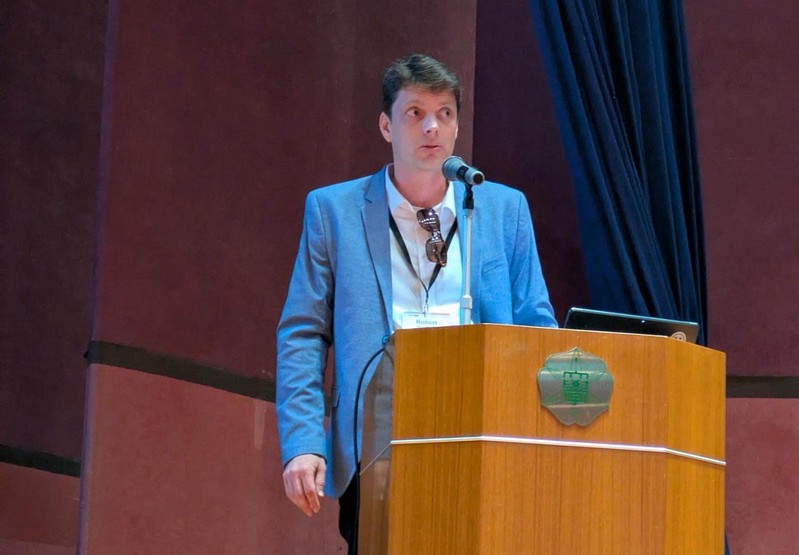
We scheduled 8 invited lectures, 44 parallel talks, 6 short lightning talks, 4 showcase talks, a mini-session on quantum cognition and Buddhism, and—something of a MoC trademark—8 extended discussion sessions, most of which split into smaller breakout groups. Invited speakers included Shigeru Taguchi (Hokkaido University), Susan Schneider (Florida Atlantic University), Takashi Ikegami (University of Tokyo), Miguel Aguilera (Basque Center for Applied Mathematics), Tom Froese (Okinawa Institute of Science and Technology), Ryota Kanai (Araya Inc.), Fernando Rosas (Sussex University), and Yuko Ishihara (Ritsumeikan University). Their topics spanned category-theoretic accounts of the unity of consciousness, non-equilibrium approaches to large-scale neural dynamics, and the potential phenomenal experience of artificial systems, among others. The diversity of backgrounds was as remarkable as it was productive: philosophers exchanged arguments with quantum physicists; mathematicians mingled with neuroscientists and roboticists.
While the talks provided intellectual stimulation, the heart of MoC6 lay in its discussion sessions. After most invited lectures, participants split into smaller seminar rooms for discussion; the speakers could join them as equals rather than “authorities on stage.” Topics were crowd-sourced through an online interface before and during the event. The highest-voted questions covered:
• “Is mathematical formalism indispensable or distracting in phenomenology?”
• “Can quantum models be fruitfully applied to studying subjective experience?”
• “Is biology necessary for consciousness?”
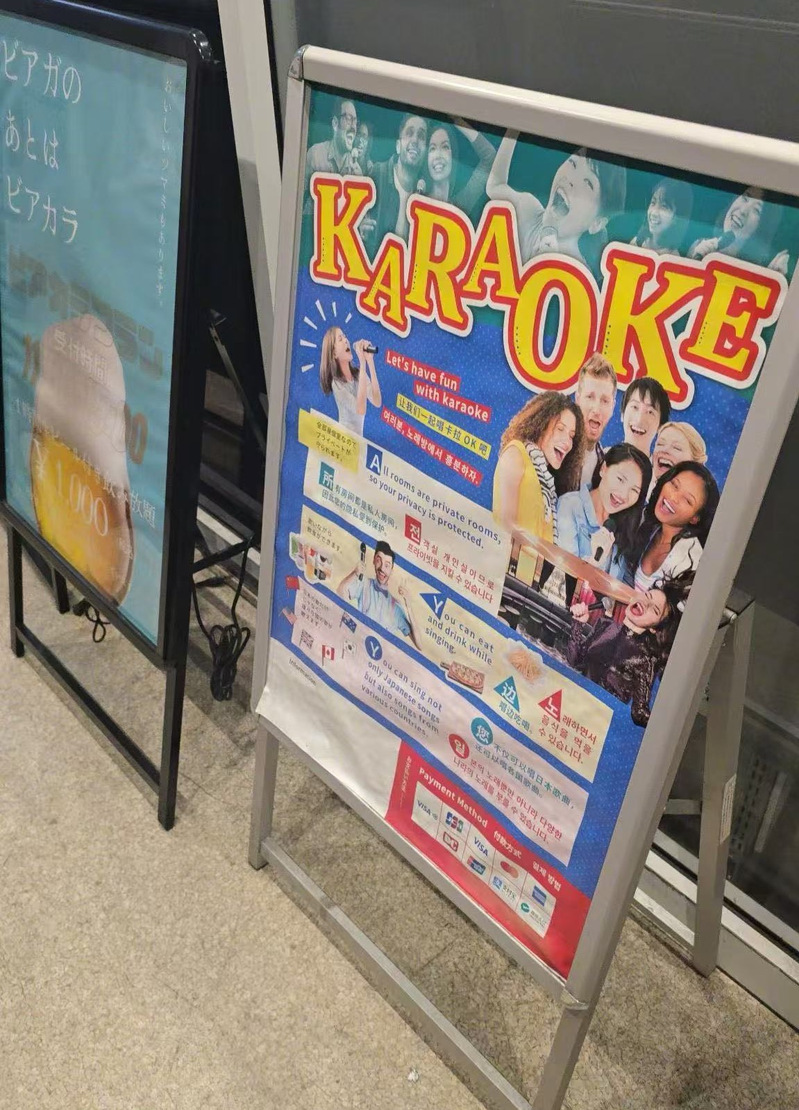
The conversations often extended into coffee breaks, dinner plans, and even Karaoke in the city. As one student said, “This conference has truly been a life-changing experience for me. I got to pitch my ideas to people from different backgrounds to hear their responses. I've made amazing friends from all around the world who, shockingly, share the same scientific interest as me.” I see this as the highest praise an organizer could receive.
4. Beyond Lectures: From Mount Moiwa to Yakiniku
We scheduled the first day of the conference as an excursion—another MoC tradition—to encourage informal conversation and break the ice. Two options were offered: a half-day hike up Mount Moiwa and a self-guided visit to the Hokkaido University Botanic Garden. I chose the hike. The weather was pleasant, and the city skyline gradually appeared as we ascended. A modest lunch at the summit was followed by plenty of discussions, led by the wind.
Evening social events continued in the same vein. The conference dinner took place at “Maido! Sapporo EkiMinamiguchi Ten,” a local izakaya specializing in all things tofu and charcoal-grilled seafood. Sake and software philosophy turned out to be a surprisingly cohesive combination.
5. Personal Reflections: Toward Global Consciousness Science
Three academic takeaways stand out:
(1) The field is shifting toward integrative approaches. Phenomenology, quantum mechanics, category theory, and information science now coexist with philosophy, empirical EEG studies, and embodied robotics. Each alone is insufficient; together they reveal a maturing field no longer satisfied with monocausal explanations.
(2) The “AI question” is urgent and unavoidable, for better or worse. Some caution that public discourse on AI consciousness has exceeded scientific consensus. Our field bears a great responsibility to provide clear, testable criteria – lest policymakers rely on intuition or hype. The extensive discussion sessions made clear that even expert opinions are divided and that no single test is sufficient. Still, everyone agreed on the need for architectural transparency and ethical prudence.
(3) Community culture matters. What distinguishes MoC from many academic meetings is its intentional focus on dialogue rather than mere dissemination. Such formats boost not only conceptual clarity but also foster innovation, which consciousness science urgently needs if it is to influence related fields and public policy.
All in all, MoC6 was a testament to the maturation of consciousness science into a genuinely global, mathematically rigorous, and phenomenologically rich field. I hope these notes convey a fraction of the intellectual excitement and collegial warmth that defined our week in Sapporo. For colleagues who couldn't attend, let this be an invitation to join us next year. For those who did attend, thank you for making the conference more than the sum of its sessions. Until MoC7.
Acknowledgments: Thanks to AMCS, CHAIN, our supporting institutions, and all participants and invited speakers for an unforgettable conference.