
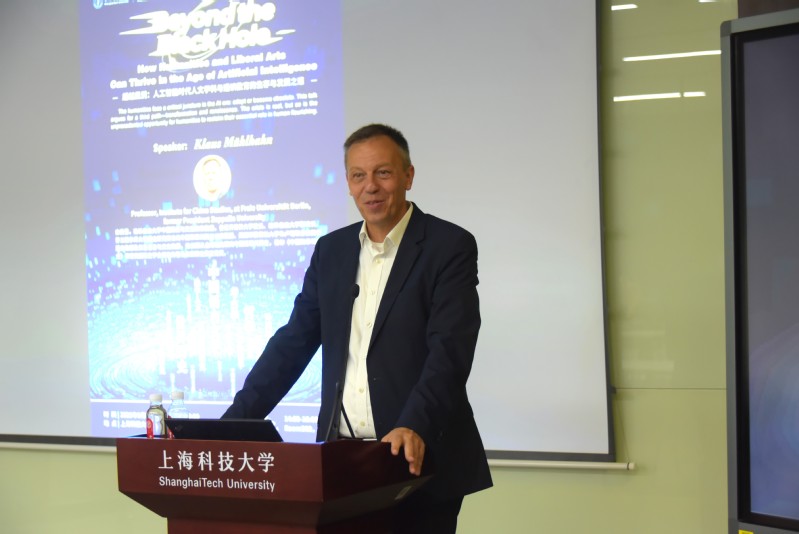
The rapid rise and expansion of artificial intelligence (AI) in recent years have posed particular challenges for scholars in the humanities. AI’s extraordinary capacity to process vast amounts of information, coupled with its increasingly sophisticated language skills, has unsettled many academics, while its widespread use among students has raised pressing questions about traditional modes of teaching and assessment. Faced with this daunting technological “black hole,” how should the humanities respond? Addressing this question, Professor Klaus Mühlhahn of Freie Universität Berlin delivered a lecture at ShanghaiTech University entitled “Beyond the Black Hole: How Humanities and Liberal Arts Can Thrive in the Age of Artificial Intelligence.” Drawing on his expertise as a historian of China and as an experienced higher education administrator, Professor Mühlhahn argued that the humanities will not disappear in the age of AI, but they must adapt to an academic environment already reshaped by it.
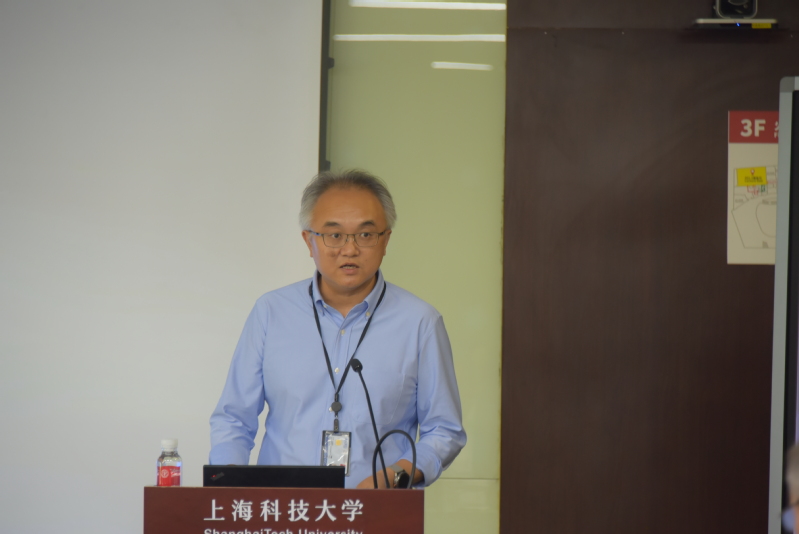
The lecture unfolded in two main parts. In the first, Professor Mühlhahn examined AI’s limitations. Although AI may seem formidable, it remains fundamentally unlike humans: it cannot feel emotions, live through experiences, or create with true originality. These very qualities—emotion, experience, creativity—lie at the heart of the humanities and define their enduring value. Precisely because of this, he urged scholars to reflect more deeply on what makes the humanities unique. At the same time, he cautioned against rejecting AI altogether. Fields such as archaeology have long benefited from advances in digital technology, and humanities scholars should likewise find ways to incorporate AI productively. The challenge, he suggested, is to explore how the humanities can coexist and evolve alongside AI, rather than retreat from it.
Building on this, the second part of the lecture focused on how humanities scholars might adapt their teaching to the new environment. Given AI’s unmatched efficiency in gathering and storing knowledge, the role of the humanities should shift toward helping students learn how to apply and interpret what they know. Professor Mühlhahn suggested reconsidering the dominance of the modern liberal arts model, which emphasizes writing skills and general education. He noted that this model is not an age-old tradition but a 19th-century construct. By contrast, medieval European universities relied heavily on direct oral instruction and teacher–student interaction. In today’s AI-driven world, the humanities may need to recover and reimagine this more interactive, discussion-based mode of teaching.
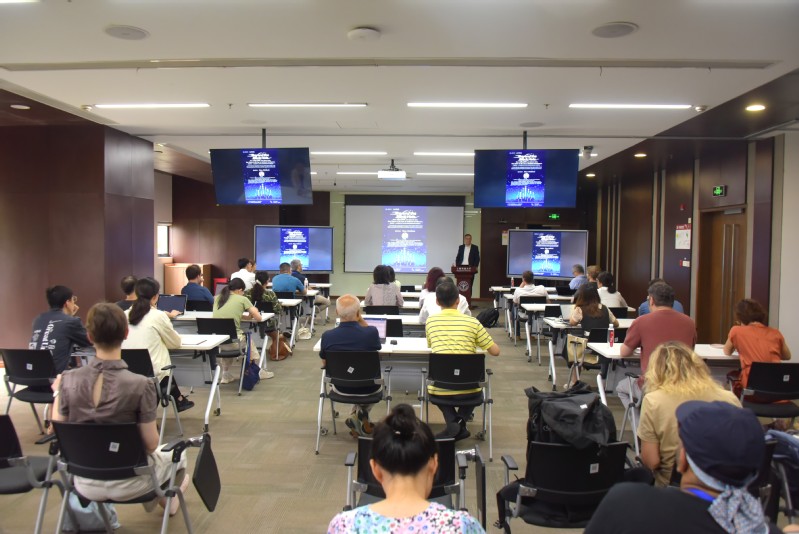
The lecture attracted more than fifty participants from ShanghaiTech University, other academic institutions, and the wider public. Despite their varied backgrounds, attendees found the discussion highly relevant and engaged in lively exchanges afterwards. Some scholars linked Professor Mühlhahn’s remarks on the human–AI distinction to Heidegger’s reflections on Dasein and being. Others voiced concerns over how the humanities might secure resources for innovation at a time when higher education faces multiple pressures. Several participants worried about AI’s broader social and political implications, while experts from information science reminded the audience not to underestimate the field’s ongoing breakthroughs.
As Professor Mühlhahn acknowledged at the outset, AI is still evolving, and no definitive roadmap exists for how the humanities should respond. Yet the lecture itself offered a valuable platform for interdisciplinary dialogue and cross-cultural exchange. While the path ahead may remain uncertain, the humanities, through continued debate and collaboration, can chart ways to survive—and even thrive—amid the profound transformations brought by AI.
Reported by Chen Lang